

Advertising
LO STORYTELLING DI FILMGOOD: Wrangler, 'Born Ready'. La parola al regista Rogier Schalken
Nel video di oggi del servizio di FILMGOOD sullo storytelling nell’audiovisual content, una esclusiva intervista con il regista.
WRANGLER Born Ready - Making Of
Un’intervista con il regista Rogier Schalken
Guarda il video anche su http://www.filmgood.sm/adlab/
E iscriviti alla newsletter giornaliera di contagio creativo.
In una esclusiva intervista rilasciata a LO STORYTELLING, il regista (e direttore di MediaMonks Films, Amsterdam) Rogier Schalken spiega la ‘visual trickery’ del piano sequenza dietro l’epico spot WRANGLER Born Ready. Accompagnando l’intervista, MediaMonks Films ha realizzato per LO STORYTELLING un brevissimo making of per fare vedere l’entità del compositing che ha portato al perfetto risultato finale. In soli 30 secondi il ‘compositing breakdown’ riesce a rivelare con chiarezza i retroscena dello spot
The first question of course has to be, ‘Where is the seamless cut to the drone shot’?
The magic happens when the dog walks out of frame. The two separate shots were both 3D tracked to make sure we had total control. We made the stitch around 33-seconds, when the tree trunk on the right is visible in the frame. At that point, we made the switch from steadycam to drone footage, which leaves us with an obvious jump-cut. To fix this we had to basically replace everything in the first frame of the drone footage.
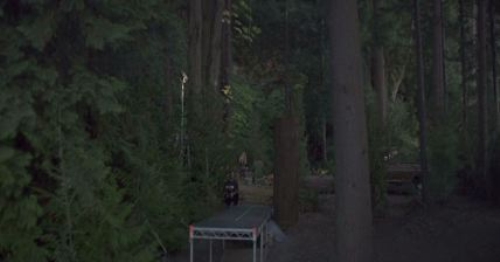
We started with the live action portion of the steadycam shot that really mattered: the people around the campfire. We stabilized the footage from the steadycam (campfire shot) and put that on a card in 3D space so it would match the camera movement of the drone footage.
On top of that, we created CG trees, bushes, grass and ground to cover up the rest of the frame (all clearly illustrated in the ‘compositing breakdown’). You could say we made a 'tunnel' of CG foliage, where the end of that tunnel was the actual footage from the steadycam. When the drone pulls back, it slowly reveals the rest of the forest and the actual drone footage.
The campfire shot, with all the actors, isn't stitched or morphed. The end of the campfire shot (as we pull back) is placed within a 3D track of the drone shot. This meant that we needed to be really precise with matching both the framing and speed between the campfire shot and drone shot.
How did you film the ground-based shots before cutting to the drone for the final track back?
The campfire shot is a steadycam shot, no trickery there. We practiced the mise-en-scene for about six hours. Adding variables like the rabbit in the beginning and the dog in the end to the fact that we only had a window of two hours of sunlight to get both the campfire and drone shot, made it all the more fun. It was shot in Vancouver at Stanley Park. Siwash Rock to be exact. We wanted more of a dusk feel so these two takes were shot between 7:30 and 8:30am. Service production was done by “Means of Production”. They were amazing and deserve a lot of credit.
In the final track back, the wind in the trees is very realistic as it’s just starting to rain. Was this purely the effect of the drone itself?
The trees that are close to the camera as we pull back are indeed affected by the force of the drone. The drone was custom built and enormous. We were expecting it to be too much, but in the end it looks great. The trees along the pad and on the edge of the cliff are post, so the movement was matched with the real trees.
How much compositing is there in the surroundings and landscape?
The birds and clouds are indeed composited but the city is 100% real and completely untouched. Same position and scale in the film as in reality. The forest and 95% of the cliff are also real. And the water edge is composited in also. Although the compositing on this job was extensive, it was never meant to change the look and feel of the shot. The time-consuming part was the stitch and removing man-made objects. For example, we removed a bicycle path that ran underneath the cliff. There were also a few fences and a small concrete spot for tourists on the edge of the cliff. 3D trees and some rocks were overlaid to hide this. This was not easy because of the anamorphic lenses we used but the original shot is not that different from the final shot. It's hard to notice which 3D trees are fake and which are real, that says a lot about the post-production team behind this.
Technically, the spot is a lovely piece of work. How complex was the post?
Thank you! I think the anamorphic lens caused the most trouble in the end. Though there is a cinema version, the decision to use anamorphic was more a creative choice. Anamorphic lenses have a certain analog cinematic feel, which I like. This anamorphic lens was light enough to fit under a drone, needless to say it had some imperfections. In the middle everything is sharp, but the further to the left or right you look, everything gets more hazy. I think a big thank you is in place for the post-production team.
Richard Ronan
FILMGOOD.jpg)
[email protected]
Un’intervista con il regista Rogier Schalken
Guarda il video anche su http://www.filmgood.sm/adlab/
E iscriviti alla newsletter giornaliera di contagio creativo.
In una esclusiva intervista rilasciata a LO STORYTELLING, il regista (e direttore di MediaMonks Films, Amsterdam) Rogier Schalken spiega la ‘visual trickery’ del piano sequenza dietro l’epico spot WRANGLER Born Ready. Accompagnando l’intervista, MediaMonks Films ha realizzato per LO STORYTELLING un brevissimo making of per fare vedere l’entità del compositing che ha portato al perfetto risultato finale. In soli 30 secondi il ‘compositing breakdown’ riesce a rivelare con chiarezza i retroscena dello spot
The first question of course has to be, ‘Where is the seamless cut to the drone shot’?
The magic happens when the dog walks out of frame. The two separate shots were both 3D tracked to make sure we had total control. We made the stitch around 33-seconds, when the tree trunk on the right is visible in the frame. At that point, we made the switch from steadycam to drone footage, which leaves us with an obvious jump-cut. To fix this we had to basically replace everything in the first frame of the drone footage.
We started with the live action portion of the steadycam shot that really mattered: the people around the campfire. We stabilized the footage from the steadycam (campfire shot) and put that on a card in 3D space so it would match the camera movement of the drone footage.
On top of that, we created CG trees, bushes, grass and ground to cover up the rest of the frame (all clearly illustrated in the ‘compositing breakdown’). You could say we made a 'tunnel' of CG foliage, where the end of that tunnel was the actual footage from the steadycam. When the drone pulls back, it slowly reveals the rest of the forest and the actual drone footage.
The campfire shot, with all the actors, isn't stitched or morphed. The end of the campfire shot (as we pull back) is placed within a 3D track of the drone shot. This meant that we needed to be really precise with matching both the framing and speed between the campfire shot and drone shot.
How did you film the ground-based shots before cutting to the drone for the final track back?
The campfire shot is a steadycam shot, no trickery there. We practiced the mise-en-scene for about six hours. Adding variables like the rabbit in the beginning and the dog in the end to the fact that we only had a window of two hours of sunlight to get both the campfire and drone shot, made it all the more fun. It was shot in Vancouver at Stanley Park. Siwash Rock to be exact. We wanted more of a dusk feel so these two takes were shot between 7:30 and 8:30am. Service production was done by “Means of Production”. They were amazing and deserve a lot of credit.
In the final track back, the wind in the trees is very realistic as it’s just starting to rain. Was this purely the effect of the drone itself?
The trees that are close to the camera as we pull back are indeed affected by the force of the drone. The drone was custom built and enormous. We were expecting it to be too much, but in the end it looks great. The trees along the pad and on the edge of the cliff are post, so the movement was matched with the real trees.
How much compositing is there in the surroundings and landscape?
The birds and clouds are indeed composited but the city is 100% real and completely untouched. Same position and scale in the film as in reality. The forest and 95% of the cliff are also real. And the water edge is composited in also. Although the compositing on this job was extensive, it was never meant to change the look and feel of the shot. The time-consuming part was the stitch and removing man-made objects. For example, we removed a bicycle path that ran underneath the cliff. There were also a few fences and a small concrete spot for tourists on the edge of the cliff. 3D trees and some rocks were overlaid to hide this. This was not easy because of the anamorphic lenses we used but the original shot is not that different from the final shot. It's hard to notice which 3D trees are fake and which are real, that says a lot about the post-production team behind this.
Technically, the spot is a lovely piece of work. How complex was the post?
Thank you! I think the anamorphic lens caused the most trouble in the end. Though there is a cinema version, the decision to use anamorphic was more a creative choice. Anamorphic lenses have a certain analog cinematic feel, which I like. This anamorphic lens was light enough to fit under a drone, needless to say it had some imperfections. In the middle everything is sharp, but the further to the left or right you look, everything gets more hazy. I think a big thank you is in place for the post-production team.
Richard Ronan
FILMGOOD
[email protected]